E-Voting Platform
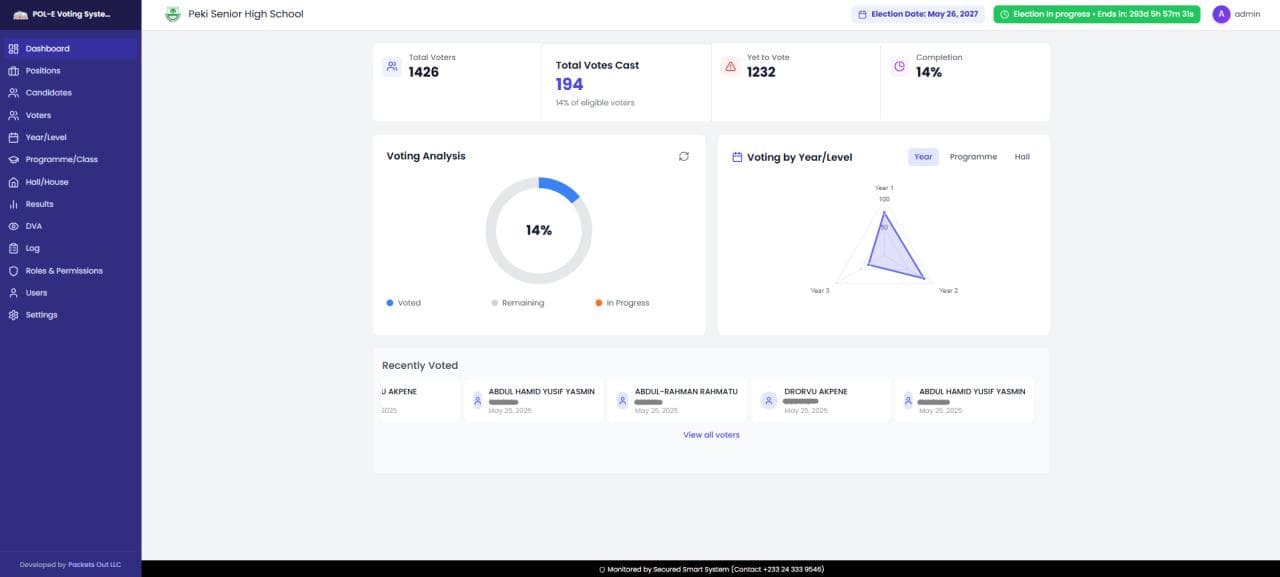
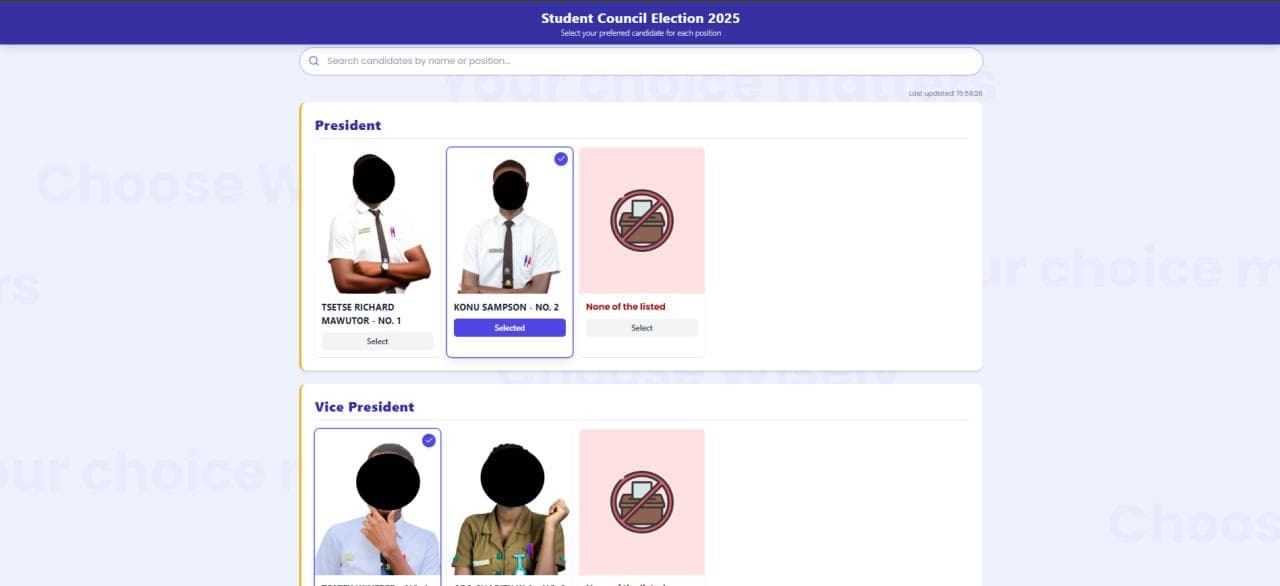
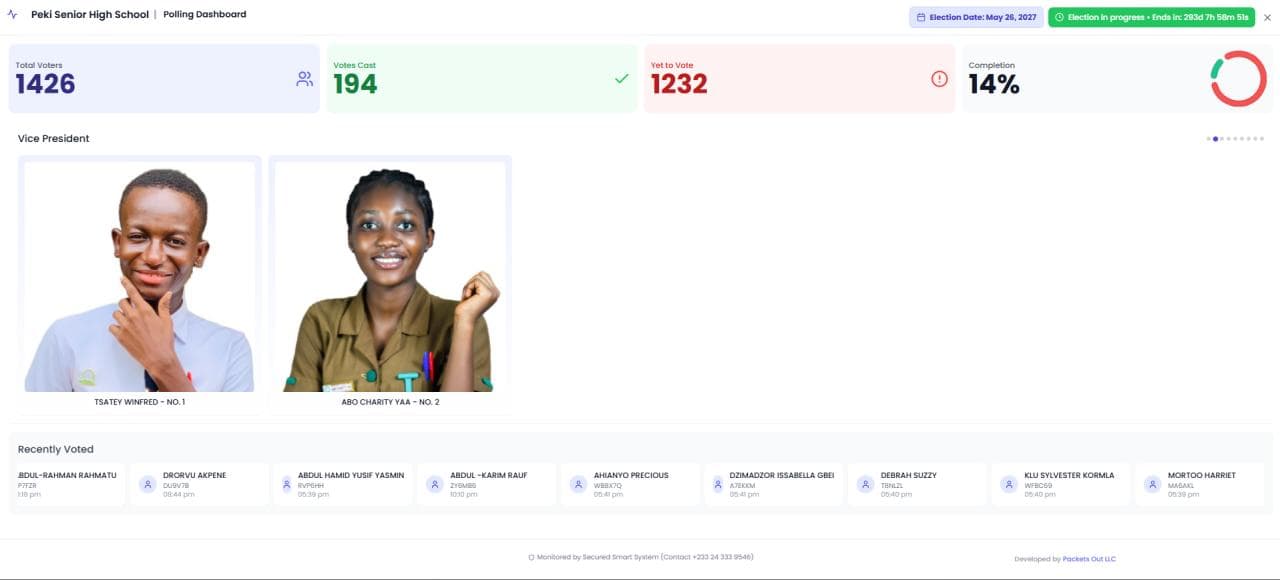
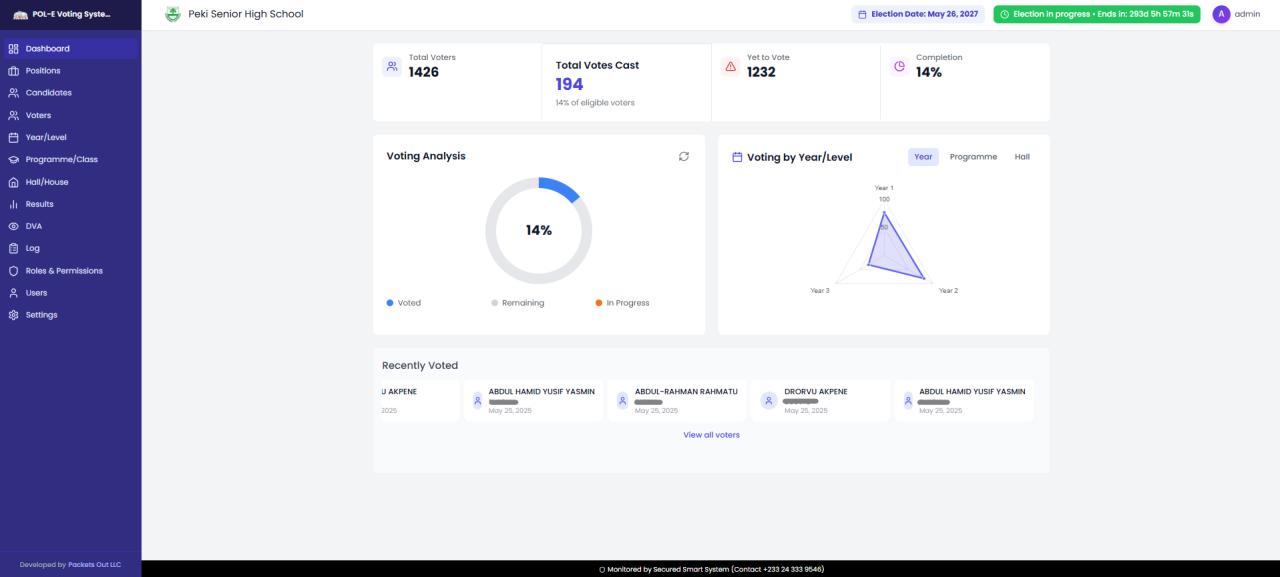
Institutions running elections by hand face slow counts and disputed results. This white-label SaaS automates the full election lifecycle with cryptographic vote receipts and real-time dashboards.
- Role
- Solo Developer
- Timeframe
- 2024
Stack
Architecture
Key decisions
A TypeScript-first architecture across the whole voting flow, with roughly 73% of the codebase typed.
A faster-to-write JavaScript-only approach, and separately, extra tooling and framework layers.
Vote integrity depends on validation, role checks, and result tallying being correct. Static types catch whole classes of silent runtime bug in exactly those paths before they ship. JS-only would have been quicker at first but raised long-term risk where correctness matters most. Extra framework layers were also rejected to keep the stack lean enough for school-level operations to maintain.
Per-election data isolation: each election owns its own separate set of voters, candidates, positions, and votes.
One shared pool of records filtered by an election id at query time.
Isolation means a change or bug in one election cannot bleed into another, and a mis-scoped query cannot silently count the wrong election's ballots. It also lets past elections be preserved intact for audit. The cost is more moving parts and deliberate migration when data must move between elections, which is the safer default for anything holding vote results.
Try it
Screens